-
Caption Text
Link -
Caption Text
Link -
Caption Text
Link -
Caption Text
Link -
Caption Text
Link -
Caption Text
Link -
Caption Text
Link -
Caption Text
Link
Helping You Improve Your Soil, One Broadfork at a Time
THREE BROADFORK MODELS ARE NOW AVAILABLE!
Scroll down the page to see all about them
About the Broadfork
The Broadfork is used to loosen soil to prepare for planting or for adding soil amendments such as compost or mulches. It will open and loosen soil while minimizing damage to its living strata of flora and fauna that provide the nutrients for the garden bed. The Broadfork is also a great tool to choose for harvesting potatoes, beets, carrots, etc.It's easy! By stepping on the crossbar, one side then the other and using only body weight, the tines are set completely into the soil. Using the tremendous leverage of the pair of 47” long handles, the soil is loosened by working the handles back and forth in a kind of rowing motion. As is the case of most old, well designed human powered tools, the Broadfork requires minimal effort for the work it produces. It's the kind of tool that almost anyone can use effectively. It doesn't require brute force, rather it provides a rhythmic, almost aerobic workout when used properly.
The Gulland Forge Broadfork
The 48” long handles are made from select Ash from the Tennessee River Valley and finished with a 50/50 blend of linseed oil and turpentine. Ash is an incredibly strong wood, and each handle is selected for density and grain quality. I install each one with the grain set in the proper direction for maximum strength and durability. Wood is far superior to steel in this application due to many factors. Steel is cold in the winter and untouchable in the summer sun. It's stiff and lacks the dynamic movement of finely contoured wood handles and the balance is all out of tune with the weight up high in the handles. The wood provides a 'give' and feels nothing like handling a crowbar stuck in the ground. I have said before that my broadfork feels less like a tool and more like a good dance partner once you have had some time to become acquainted with it. For more information about our handles, read this post on our Broadfork Blog.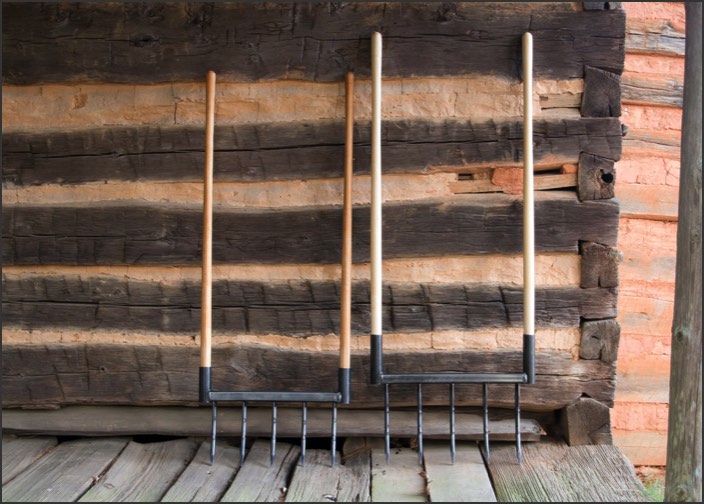
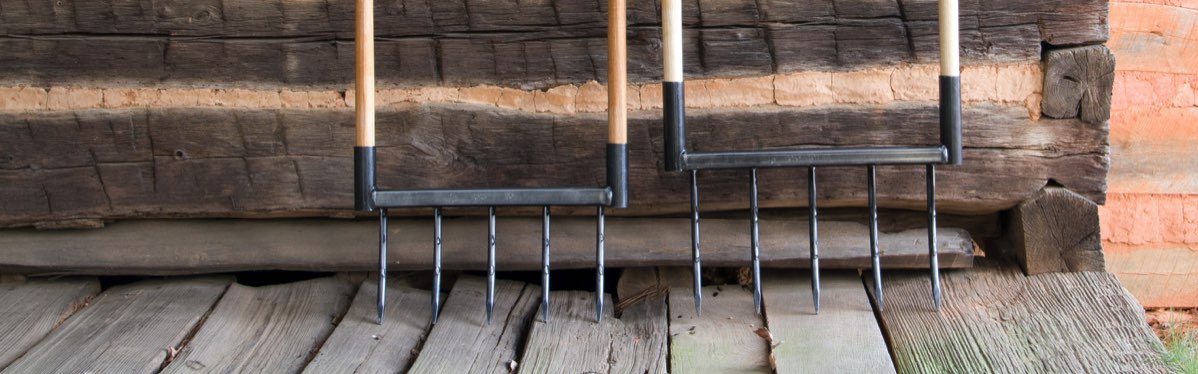
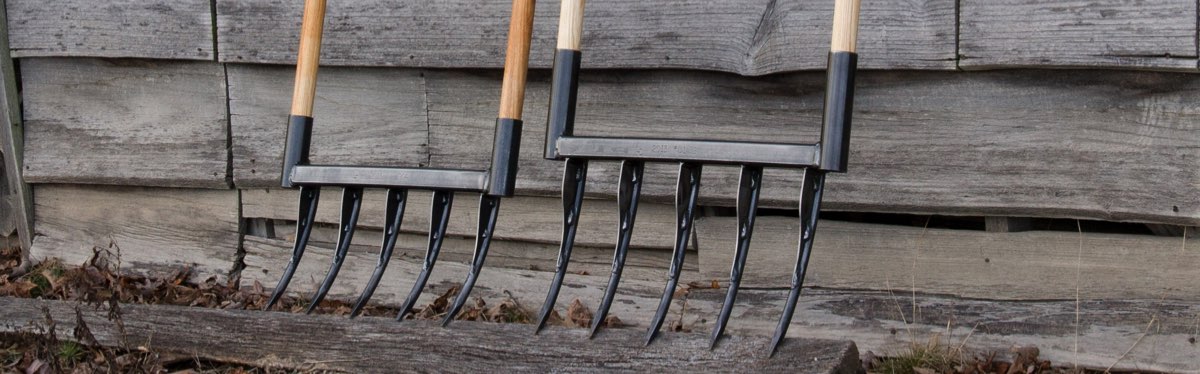
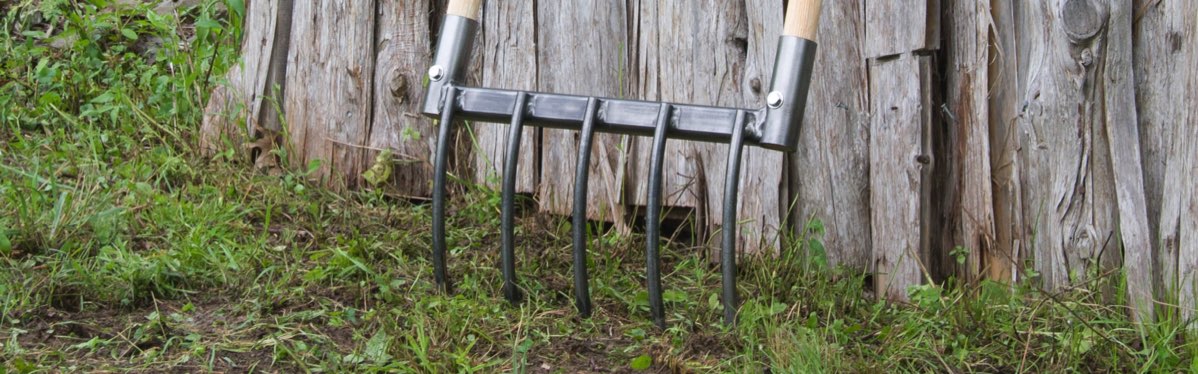
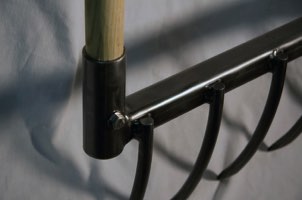
The business end of the Broadfork is made of very heavy walled 1.5" square tubing, very comfortable under foot. On either end is welded a handle socket. The bend of the tine is a constant radius curve which allows for easier penetration by allowing the “tail to follow the head” as the hand forged tapered tips are inserted into the soil. The tines are attached in a way that makes them easily repairable. The metal is coated with the same linseed oil/turpentine blend used on the handles.
Though it is a tough, durable tool, it’s not supposed to replace a tiller in compacted, dense or rocky soils. Pick and spades are better for initial ground breaking and once the sod busting is done, the Broadfork makes quick work of further improving the soil, providing deep aeration.
Though it is a tough, durable tool, it’s not supposed to replace a tiller in compacted, dense or rocky soils. Pick and spades are better for initial ground breaking and once the sod busting is done, the Broadfork makes quick work of further improving the soil, providing deep aeration.
I have been a blacksmith since 1986 and putting tools into the hands of people that want to raise their own food is the best job I have ever had.
Our Broadfork Models
Click on thumbnail photos for more images.
The 'Original'
The 'Big Bertha'
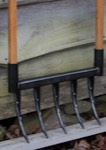
The 'Bertha'
After passing the milepost of building the 900th Gulland Broadfork, I have decided it is the perfect broadfork for almost everyone's needs. With that many out there, I have had a mountain of emails from gardeners that simply love the tool. Often I get inquiries about a broadfork with longer tines and a wider frame. One of those came from a gentleman with the name 'Sasquatch' in his email address. I felt a need to respond to him.
As a small, one person business, I can't be too quick to respond, because I honestly don't have a lot of time on my hands to do proper research and development on a new design. I want my tools to be the best and if it takes a bit longer, that's OK. After a couple of years of designing and testing, I am proud to introduce you to a couple of new tools from Gulland Forge.
When I wanted to name a bigger and tougher broadfork, I looked no farther than my own grandmother's name. Bertha Elizabeth White was a bit bigger and tougher than most; she was born in the 1890s in north Alabama and lived her life through some of the toughest times fully knowing what hard work was all about. The new forks are the Bertha and the Big Bertha.
Over the years, people have asked me to make longer and longer tines. The proper tine length is one of those things that has less to do with the soil and more to do with the person using the tool. A 60 inch tall person weighing 100 pounds has no business using a 16 inch tine, 25 pound broadfork in thick clay soils. Think of the biomechanical and ergonomic inefficiencies of pulling a tool that weighs a quarter of your body weight out of the soil hundreds of times a day. Then think about stepping up on a foot bar that is higher than your knee and raising yourself up on it, hundreds of times a day. Also to consider is that as we age, none of this gets easier.
Soil will develop and grow with 9-½ inch tines as well as it will with 11-½ inch tines; it will simply do it a little slower.
Our Broadforks:
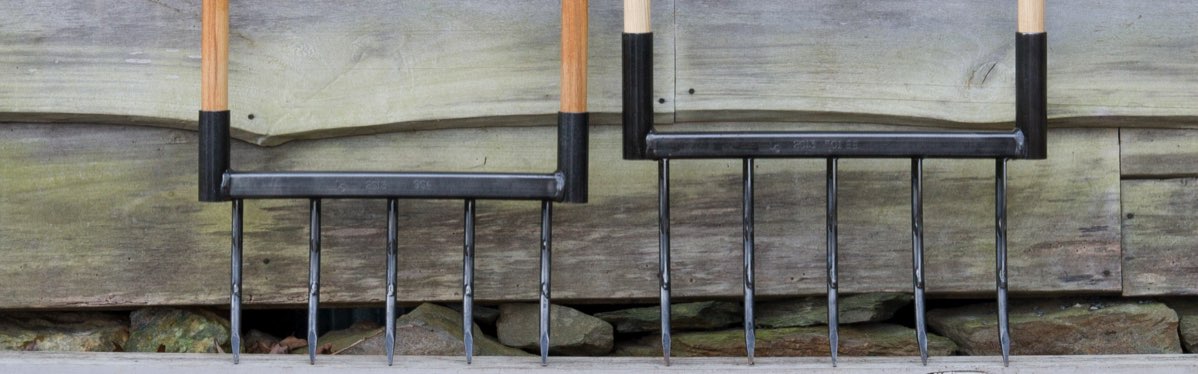
The Big Bertha has a new radius curve to fit the different tine length and is also fitted with 1/8" steel strengthening gussets. It is 2 inches wider, taller and deeper than the Original.
Overall height: 62"
Overall width: 23.5"
Overall Tine width: 19.25"
Tine length, measured from below frame crossbar: 11.25"
Total Weight: 19 lbs.
$255 plus shipping
The Bertha is exactly an original Gulland Broadfork with the addition of strengthening gussets made of 1/8" steel welded to the tines.
The gussets are designed to have the least amount of steel with the maximum amount of strength. The forged points on the round bar slip quite easily into the soil.
The gussets on the Bertha and Big Bertha are placed to give the most strength and minimum resistance when being pressed into the soil. It all works out better for you.
See measurements for the Original below.
Total weight is 17 lbs.
$235 plus shipping
The Original
Overall height: 57"
Overall width: 21.5"
Overall Tine width: 17.5"
Tine length, measured from below frame crossbar: 9.5"
Total Weight: 16 lbs.
$205 plus shipping
A note about shipping: The cost of shipping UPS and USPS has increased. We are doing everything we can to keep the price down. Shipping charges will be added at checkout based on location and are only for the continental U.S. Please inquire about shipping charges to locations outside the continental U.S.
Do I need a Gusseted Fork? The gusseted fork is not for everyone. There's just a bit of added weight and a little more resistance when it's penetrating the soil and if your soil is in good shape, the extra strength from the Bertha is not necessary. Where these new tools excel is in hard, everyday use, such as in a CSA farm or a community garden. I believe the broadfork is not the best tool for breaking up sod for new garden soil. The soil should be first tilled or broken up with picks, shovels, mattocks or digging bars. The best use of a broadfork is in more mature garden beds.
As a small, one person business, I can't be too quick to respond, because I honestly don't have a lot of time on my hands to do proper research and development on a new design. I want my tools to be the best and if it takes a bit longer, that's OK. After a couple of years of designing and testing, I am proud to introduce you to a couple of new tools from Gulland Forge.
When I wanted to name a bigger and tougher broadfork, I looked no farther than my own grandmother's name. Bertha Elizabeth White was a bit bigger and tougher than most; she was born in the 1890s in north Alabama and lived her life through some of the toughest times fully knowing what hard work was all about. The new forks are the Bertha and the Big Bertha.
Over the years, people have asked me to make longer and longer tines. The proper tine length is one of those things that has less to do with the soil and more to do with the person using the tool. A 60 inch tall person weighing 100 pounds has no business using a 16 inch tine, 25 pound broadfork in thick clay soils. Think of the biomechanical and ergonomic inefficiencies of pulling a tool that weighs a quarter of your body weight out of the soil hundreds of times a day. Then think about stepping up on a foot bar that is higher than your knee and raising yourself up on it, hundreds of times a day. Also to consider is that as we age, none of this gets easier.
Soil will develop and grow with 9-½ inch tines as well as it will with 11-½ inch tines; it will simply do it a little slower.
Our Broadforks:
The Big Bertha has a new radius curve to fit the different tine length and is also fitted with 1/8" steel strengthening gussets. It is 2 inches wider, taller and deeper than the Original.
Overall height: 62"
Overall width: 23.5"
Overall Tine width: 19.25"
Tine length, measured from below frame crossbar: 11.25"
Total Weight: 19 lbs.
$255 plus shipping
The Bertha is exactly an original Gulland Broadfork with the addition of strengthening gussets made of 1/8" steel welded to the tines.
The gussets are designed to have the least amount of steel with the maximum amount of strength. The forged points on the round bar slip quite easily into the soil.
The gussets on the Bertha and Big Bertha are placed to give the most strength and minimum resistance when being pressed into the soil. It all works out better for you.
See measurements for the Original below.
Total weight is 17 lbs.
$235 plus shipping
The Original
Overall height: 57"
Overall width: 21.5"
Overall Tine width: 17.5"
Tine length, measured from below frame crossbar: 9.5"
Total Weight: 16 lbs.
$205 plus shipping
A note about shipping: The cost of shipping UPS and USPS has increased. We are doing everything we can to keep the price down. Shipping charges will be added at checkout based on location and are only for the continental U.S. Please inquire about shipping charges to locations outside the continental U.S.
Do I need a Gusseted Fork? The gusseted fork is not for everyone. There's just a bit of added weight and a little more resistance when it's penetrating the soil and if your soil is in good shape, the extra strength from the Bertha is not necessary. Where these new tools excel is in hard, everyday use, such as in a CSA farm or a community garden. I believe the broadfork is not the best tool for breaking up sod for new garden soil. The soil should be first tilled or broken up with picks, shovels, mattocks or digging bars. The best use of a broadfork is in more mature garden beds.

Questions?
Contact Us!
Our Commitment to Quality
I have been a blacksmith since 1986, and in 2008 I decided to design and produce a broadfork. I have always appreciated good quality, efficient hand tools and I wanted mine to be the best available. My blacksmith shop was just a few feet from our garden, so design experimentation was easy. Beautiful in its simplicity, there's not much room to improve a broadfork in concept, but I attempted to weed out all the potential trouble spots that I found in some others. I discovered that some designs are very difficult to repair, for example. In this throw away world, I wanted my broadfork to be one that could be used for years, and be easily repaired if repair was ever needed.
We are a small, family owned business. Our goal, in every aspect of the Gulland Broadfork design and fabrication, is that it be simple, maintainable, repairable, and of the highest quality available with no compromises. Whether you are a backyard gardener or a market grower, the Gulland Forge Broadfork will be a helpful tool you'll enjoy using for many seasons to come.
~Larry Cooper, Blacksmith
I have been a blacksmith since 1986, and in 2008 I decided to design and produce a broadfork. I have always appreciated good quality, efficient hand tools and I wanted mine to be the best available. My blacksmith shop was just a few feet from our garden, so design experimentation was easy. Beautiful in its simplicity, there's not much room to improve a broadfork in concept, but I attempted to weed out all the potential trouble spots that I found in some others. I discovered that some designs are very difficult to repair, for example. In this throw away world, I wanted my broadfork to be one that could be used for years, and be easily repaired if repair was ever needed.
We are a small, family owned business. Our goal, in every aspect of the Gulland Broadfork design and fabrication, is that it be simple, maintainable, repairable, and of the highest quality available with no compromises. Whether you are a backyard gardener or a market grower, the Gulland Forge Broadfork will be a helpful tool you'll enjoy using for many seasons to come.
~Larry Cooper, Blacksmith